Materials We Love: The Details That Give an Interior Its Character
Growing up in Italy, stone was everywhere. From marble floors and limestone façades to the worn steps of historic buildings, it's a material with a long and fascinating history.
Growing up in Italy, stone was everywhere. From marble floors and limestone façades to the worn steps of historic buildings, it's a material with a long and fascinating history.
Perhaps that's why we're naturally drawn to it.
We particularly love travertine for its earthy tones and distinctive texture, but marble, limestone and other natural stones all have their place.
No two pieces are exactly alike, and that's part of their appeal.
Whether used for a statement fireplace, a bathroom vanity or a beautiful tabletop, stone can bring depth and architectural character to an interior.
The key is choosing the right stone for the right application, taking into account its finish, maintenance requirements and how it will be used.
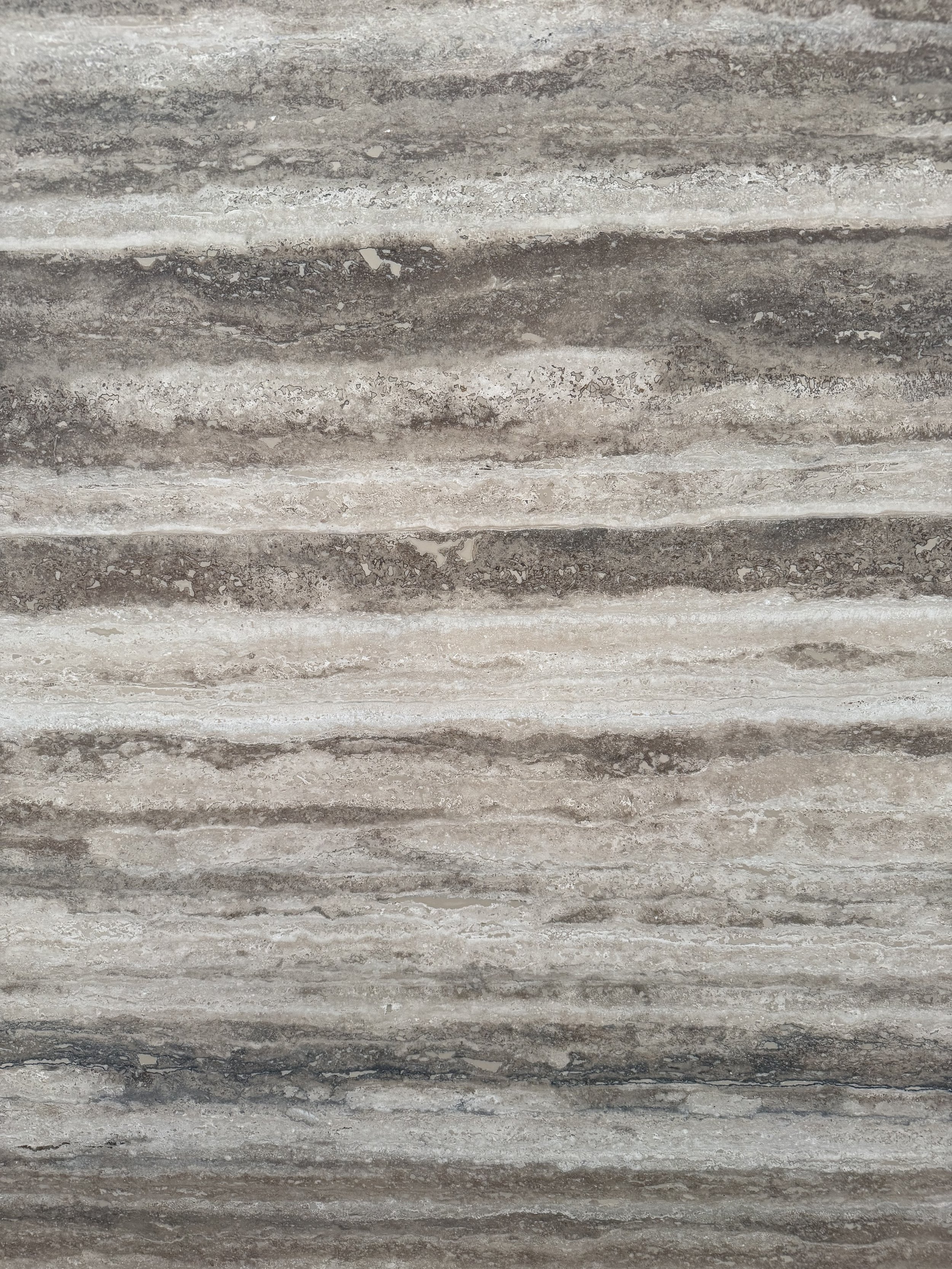
The beauty is in the combination.
Contrasting textures, natural materials and carefully chosen finishes bring depth, warmth and individuality to an interior.
Natural stone and timber: a beautiful contrast
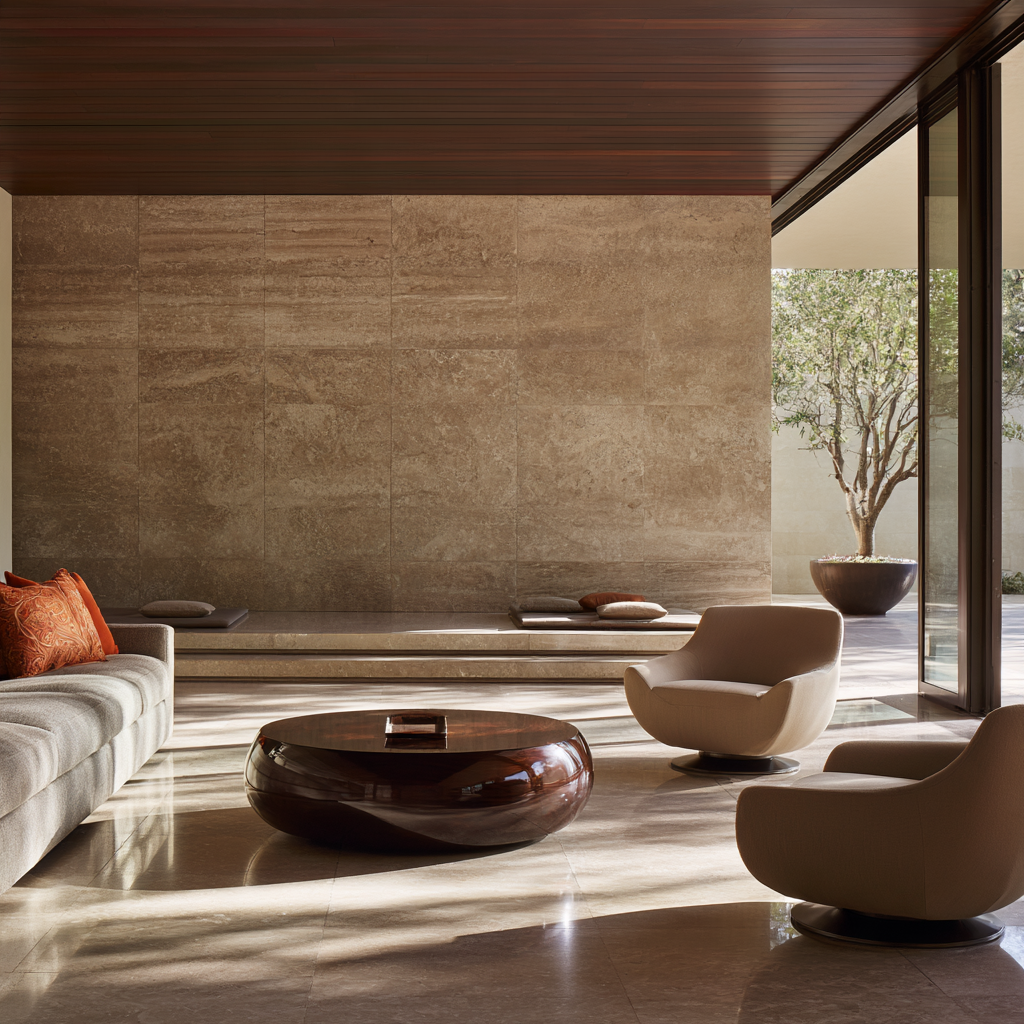
There's something particularly appealing about combining the organic movement of natural stone with the warmth of timber.
Think richly grained walnut alongside travertine, or warm oak against a beautifully veined marble.
Stone introduces variation, texture and a certain architectural presence, while timber adds warmth and richness. Together, they create a balance that feels both sophisticated and welcoming.
We particularly love these combinations in kitchens, bathrooms and bespoke joinery, where the materials can become an integral part of the architecture rather than simply decorative finishes.
The secret is in the balance. A dramatically veined stone might call for a more restrained timber finish, while a simpler stone can sit beautifully alongside a more expressive wood grain.
It's also important to consider how the materials will be used. Natural stone can have specific sealing and maintenance requirements, while the choice between solid timber, veneer and engineered finishes depends on the application.
Beautiful materials should be a pleasure to live with, not just to look at.
Material choices made early shape everything that follows.
The beauty of combining smooth and textured finishes
Some of the most interesting interiors are built around contrast.
A smooth marble surface against a textured plaster wall. Handmade ceramics beside beautifully finished cabinetry. The subtle sheen of a glazed tile paired with the softness of natural linen.
These combinations introduce depth without necessarily relying on bold colours or elaborate decoration.
We have a particular affection for handmade and artisanal finishes, where slight variations in texture, colour and shape give a surface its individuality.
It's something we associate strongly with Italian craftsmanship, although beautiful examples can be found across many different cultures and traditions.
When combining these finishes, we're always looking at how they respond to light.
A glazed ceramic can catch the light beautifully, while a matt, textured surface absorbs it. Placed together, they can create a wonderful sense of movement throughout the day.

Layout, finishes, lighting and joinery all need to speak to each other.
Rich fabrics and natural materials: adding softness and personality
We love introducing textiles into a scheme, particularly when they're used to contrast with more architectural materials.
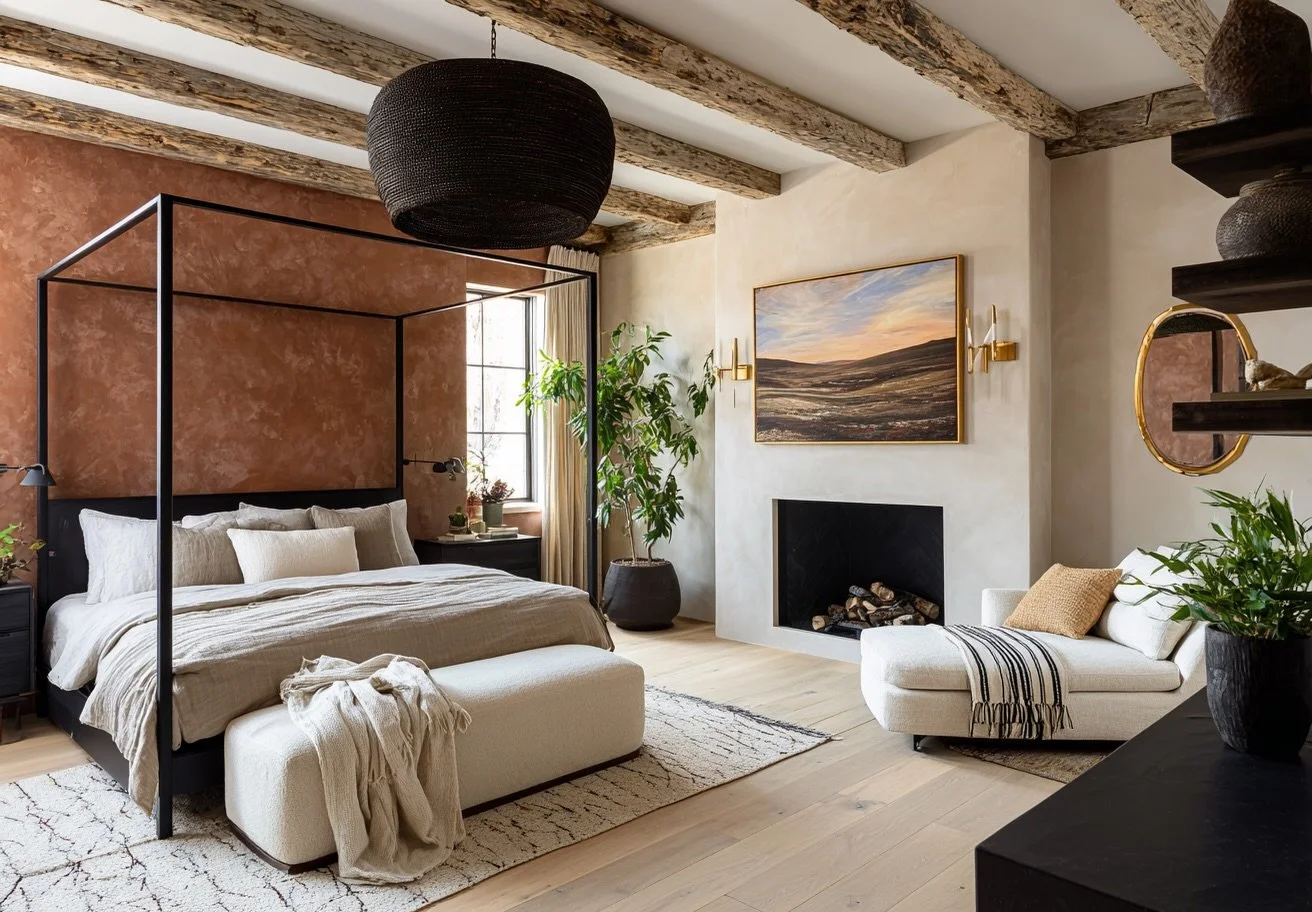
A richly coloured velvet sofa against oak flooring. A linen curtain softening a stone wall. A patterned armchair sitting alongside a beautifully crafted timber side table.
These combinations make a room feel layered and inviting.
And while we're drawn to natural fabrics such as linen, wool and cotton, we also appreciate the practical benefits of modern performance fabrics, especially in busy family homes.
For us, choosing upholstery is about finding the right balance between appearance, comfort and the way a room will actually be used.
We also enjoy mixing patterns and textures, rather than relying on perfectly coordinated fabrics.
A combination of different weaves, colours and finishes can introduce a sense of individuality that makes a home feel genuinely personal.

Once work is underway, changes become far more expensive.
Adding metal: the detail that brings everything together
Metal finishes can completely change the character of a material palette.
Take walnut and marble, for example. Introduce brushed brass and the combination becomes warmer and more decorative. Pair them with brushed stainless steel and the overall effect can feel sharper and more contemporary.
We particularly love aged brass, bronze and finishes with a little depth and character.
But there's no single finish that works for every interior.
Sometimes a polished surface is exactly what's needed to introduce contrast. Elsewhere, a more understated finish allows the surrounding materials to take centre stage.
We consider these details across the entire room, from cabinet hardware and lighting to furniture legs and architectural fittings.
It's often the smallest elements that help make a scheme feel complete.

A strong design needs a strong team behind it.
Creating a material palette that feels personal
For a significant renovation, extension, new build or whole home project planned for 2027, late 2026 is a very sensible time to begin speaking to an interior designer.
The exact timing will always depend on the scale of the project and where you currently are in the process. Some clients come to us with architectural drawings already prepared, while others contact us shortly after purchasing a property because they want help understanding what could be done with it.
Others already have a contractor or kitchen company involved and need support pulling the wider interior together.
There is no single point at which every project needs to begin, but having enough time to plan properly makes a noticeable difference. It allows us to develop ideas, review options, obtain samples, speak to suppliers and makers and account for longer lead times before everything becomes urgent.
For busy clients in particular, this also removes some of the pressure of having to make constant decisions alongside work and family life.
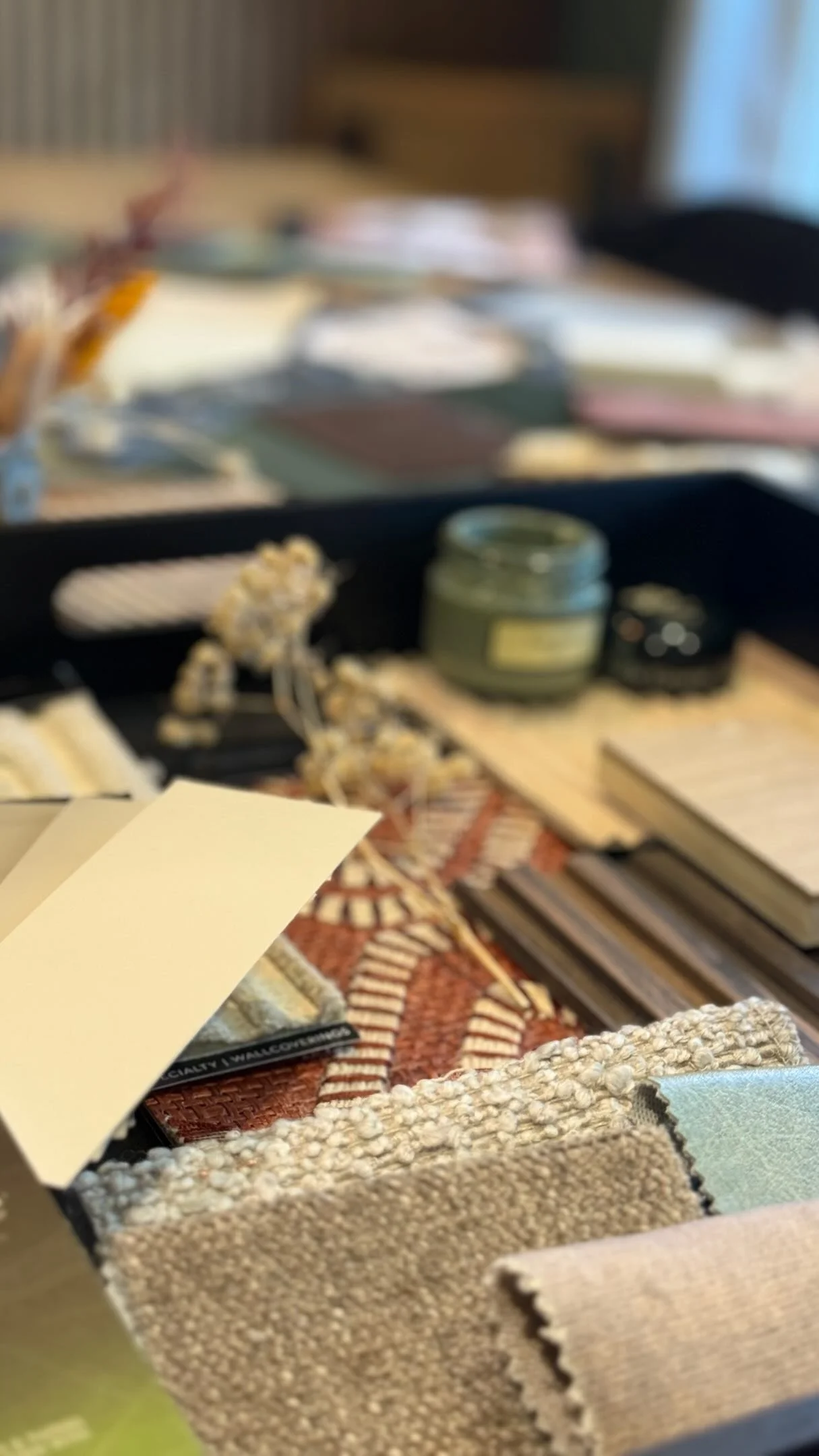
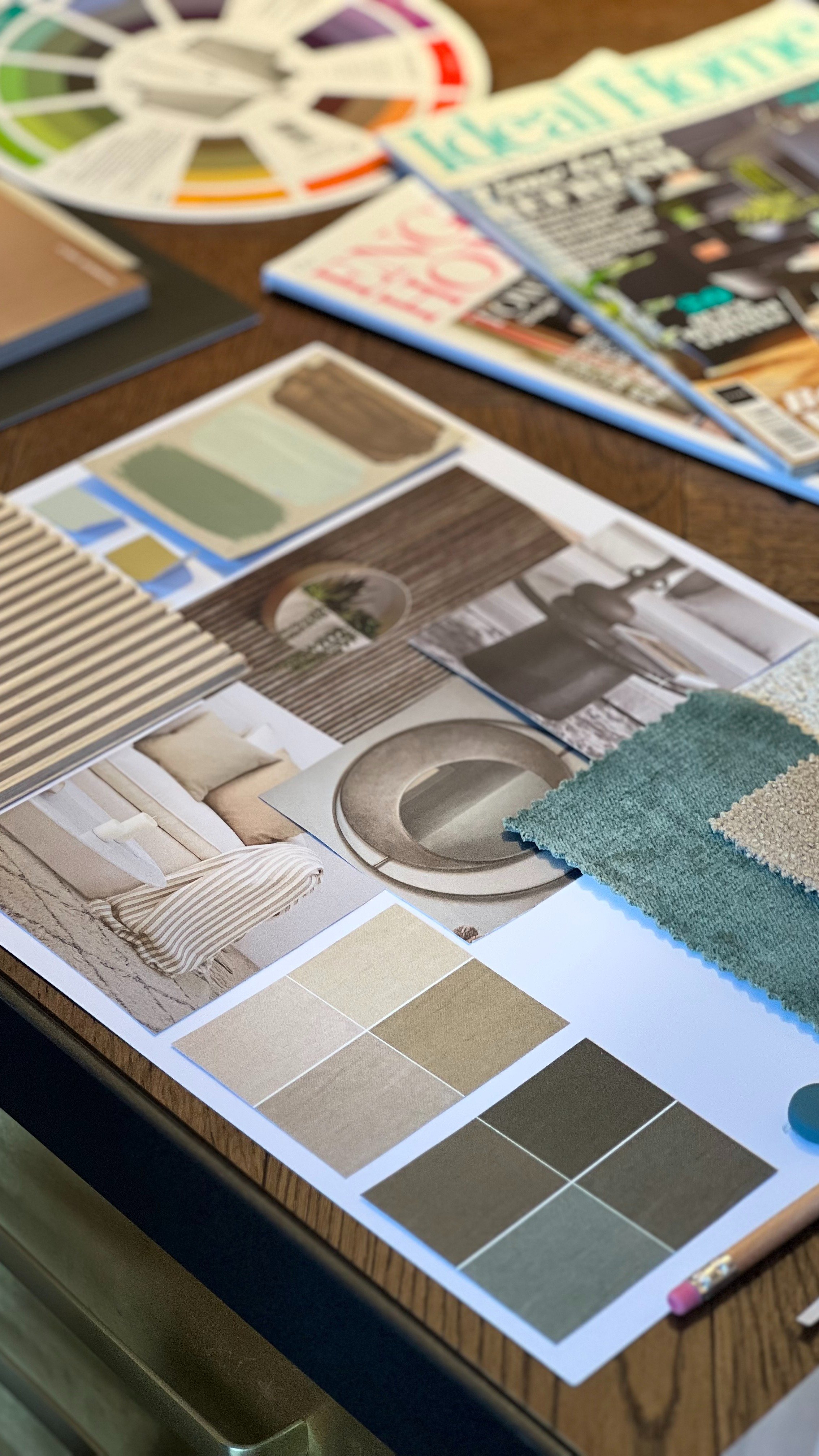
Interior designer reviewing architectural drawings, fabric samples and material finishes at a design studio desk, exploring textures, colours and combinations for a bespoke interior design project.
A home with character
Our appreciation for natural materials, craftsmanship and expressive interiors is deeply connected to our Italian heritage.
But we don't believe in following a particular formula.
Some homes call for rich colours and dramatic contrasts. Others benefit from a softer palette with subtle variations in texture and finish.
What matters is creating a space that feels appropriate for the property and genuinely reflects the people living there.
And often, it all begins with a few beautiful materials laid out together on a table.
Whether you're renovating an entire property or rethinking an individual room, we can help you develop an interior that brings together beautiful materials, thoughtful details and your own personal style.
At Studio Dimora, we offer bespoke interior design services in Cheshire and across the UK.
Explore our services at studiodimora.co.uk or get in touch at hello@studiodimora.co.uk to discuss your project.